Share
Moldova–Ireland social security deal: what it means for your pension
27.10.2026
4 min
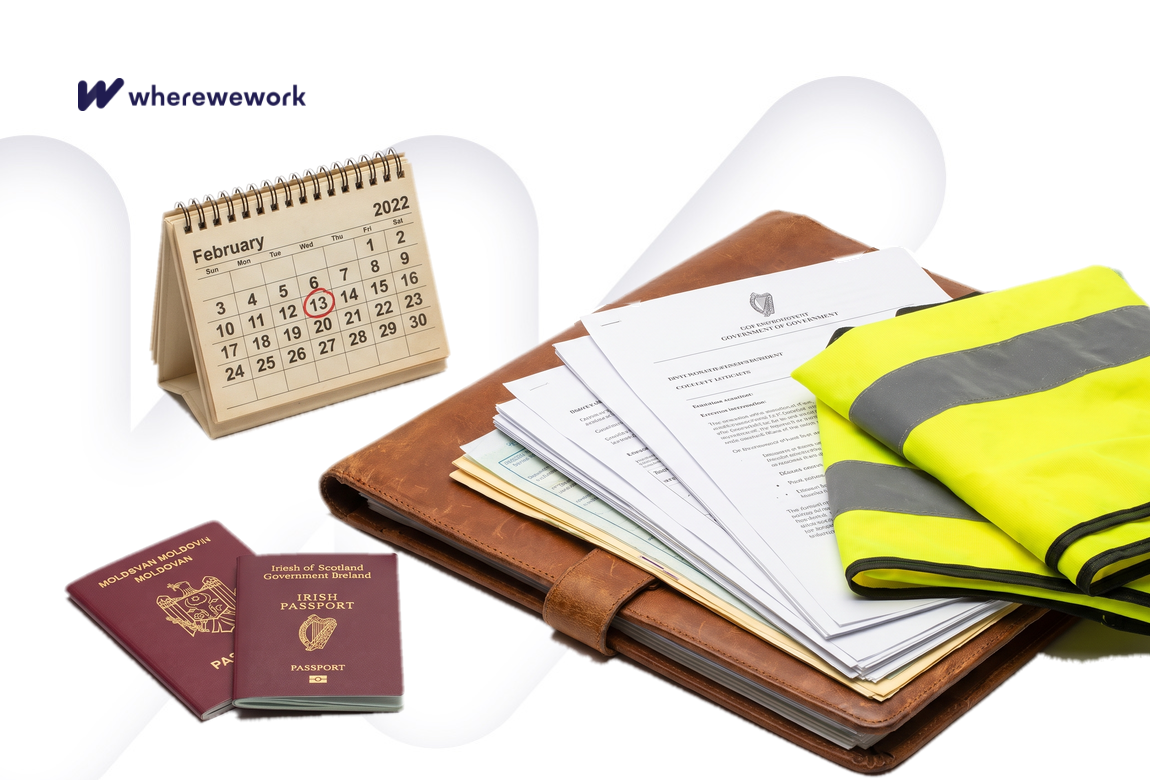
Moldovan workers in Ireland are a step closer to pension protection. On 21 October, the Government approved the opening of negotiations and the signing of a social security agreement with Ireland. For the roughly 30,000 Moldovans living there, years worked in both countries could be added together when pension entitlement is assessed. The key word is "could": for now, the agreement does not apply.
For many, the years in Ireland have meant higher salaries, but also contributions paid month after month into the Irish social insurance system (PRSI, Pay Related Social Insurance). The obvious question is what happens to that money if you one day return home. Here is what has been decided, what comes next and what you can do right now so you don't lose anything along the way.
What the Government decided and who is handling the negotiations
The Chișinău government has given the green light to negotiate and sign the Agreement on social security between the Republic of Moldova and Ireland. Parliament's Foreign Policy Committee has also approved the advisory opinion needed to start negotiations. Talks with the Irish side will be coordinated by the Ministry of Labour and Social Protection.
The figure of 30,000 Moldovan citizens in Ireland comes from the Embassy of the Republic of Moldova in Ireland. Minister of Labour and Social Protection Natalia Plugaru explained what is at stake: "We have around 30,000 citizens in Ireland, and many of them contribute to the social insurance system there through the work they do. We need to make sure that the rights they acquire through these contributions are protected."
This agreement is not a first. Moldova has signed 23 social security agreements, 19 of which are already in force. In recent years, similar deals have been concluded with Italy, Greece, Spain, Latvia, France, Switzerland, Canada and Ukraine, so the mechanism is well established.
Which benefits the agreement covers
The document covers pensions and benefits linked to work capacity. Specifically, it includes:
-
Old-age pension: the pension you receive when you reach retirement age.
-
Disability pension: for cases where you lose all or part of your capacity to work.
-
Benefits for workplace accidents and occupational diseases: when the disability is caused by an accident at work or an illness contracted because of your job.
-
Survivor's pension: for family members, if the insured person dies.
Minister Plugaru summed up the core principle: "A social security agreement means that contribution or work periods completed in the Republic of Moldova and in Ireland will be added together to establish pension entitlement."
How your pension is calculated when you have worked in two countries
The mechanism has two steps, and it helps to understand them separately. First, insurance periods from both countries are added together to check whether you meet the conditions for a benefit. Second, each country calculates and pays only the share corresponding to the periods worked on its territory, under its own legislation.
Take a hypothetical example. Say you worked 12 years in Moldova and 9 years in Ireland. When your pension entitlement is checked, all 21 years count together. The money, however, comes from two sources: Moldova pays the share for the 12 years and Ireland pays for the 9, each under its own rules. You will therefore receive two separate pensions, with amounts calculated independently.
The most important part for anyone thinking of returning: once the agreement takes effect, people who worked in Ireland will be able to claim their pension rights even after moving back to Moldova. The Government is counting on exactly that. Prime Minister Vasile Tofan said: "We hope as many of our people as possible who are building up pensions in Ireland will come to retire here, in Moldova, and spend their Irish pensions here, at home."
Why nothing changes overnight
This is the most important caveat. The agreement's provisions apply only once the document has been negotiated, signed and entered into force, not immediately after the Government's decision. The road ahead looks roughly like this:
-
Negotiation and signing: the document is expected to be initialled or signed in November.
-
Ratification: after signing, the agreement must be ratified by the Parliament of the Republic of Moldova.
-
Entry into force: this happens only after all required procedures are completed. No specific date has been announced.
The final text is still being negotiated, so details such as how periods worked before entry into force will be treated have not been made public. Until then, nothing is guaranteed. If you plan to return in the near future, don't make decisions on the assumption that the agreement already applies.
What you can do right now to protect your contribution years
Whatever the final text looks like, one thing is certain: when you claim your pension, you will have to prove where and for how long you worked. The sooner you gather your paperwork, the easier it will be. A few simple steps:
-
Keep every payslip and employment contract from Ireland, including from employers you left long ago.
-
Ask for documents when you change jobs: written confirmation of your employment period is much harder to obtain years later.
-
Write down the identification numbers under which your contributions were registered in the Irish system (such as your PPS number).
-
Gather your Moldovan records too: your work record book (carnet de muncă) and contracts for years worked at home count just as much towards the total.
-
Build a digital archive: scan or photograph everything and keep copies in at least two places.
-
Follow the timeline: announcements from the Ministry of Labour and Social Protection, the Embassy of the Republic of Moldova in Ireland, and the ratification vote in Parliament.
If you are already thinking about coming back and are looking for jobs in Moldova, compare offers carefully and read reviews left by employees about the companies that interest you. A formal job with paid contributions matters for your pension just as much as your years in Ireland.
Conclusion: an important step, but not yet a guarantee
For the diaspora in Ireland, the Government's decision is good news, welcomed by Ambassador Larisa Miculeț as the result of joint efforts over several years. Still, several stages remain between approving negotiations and an actual pension payment, and each one can take time.
In the meantime, the most useful thing you can do is simple and depends on no one else: gather your documents now for every year worked, in Ireland and in Moldova, and keep an eye on when Parliament ratifies the agreement.
Share
What I read is worth it:
Read all the articles about
HR Metrics Guide Editorial Economic Career planning Workforce planning Labour market LegislativeArticle written by:
 wherewework.md
Comments
0 comments
No comments! Be the first to comment on this article!

Access your account and add your comment
HR Metrics


Subscribe to the Newsletter
Read articles of interest from wherewework.md contributors
