Share
How Artificial Intelligence is Transforming Recruitment and Hiring
24.10.2025
4 min
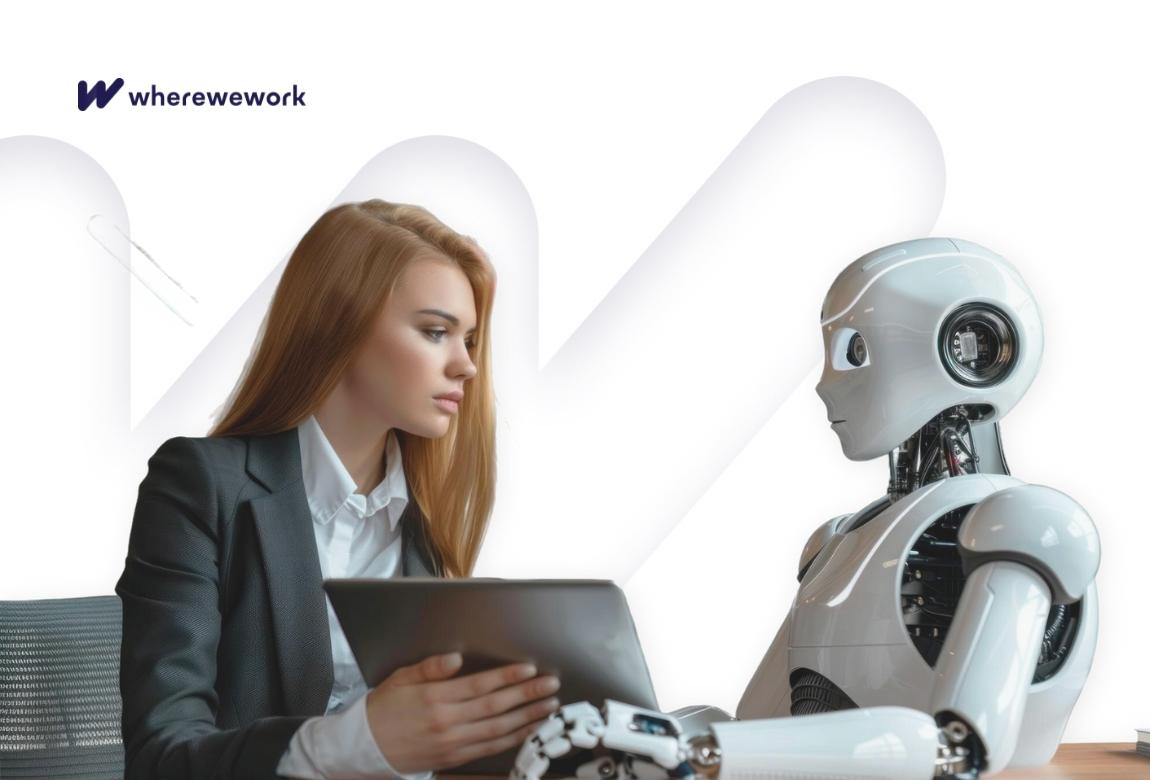
In today’s fast-paced digital era, artificial intelligence (AI) has become an essential ally in human resources management, especially in the areas of recruitment and hiring. Companies worldwide face major challenges: overwhelming volumes of job applications, limited time for evaluations, and the need to attract qualified talent in an increasingly competitive environment.
According to a 2025 Demand Sage report, 87% of companies already use AI-based tools for recruitment, demonstrating rapid adoption and a profound transformation of traditional processes. This article explores how AI optimizes key stages of recruitment, from candidate sourcing to onboarding, highlighting the benefits supported by recent studies and relevant statistics. It also examines AI’s impact on Employer Branding, Compensation, and L&D (Learning and Development), offering a balanced view of both opportunities and challenges.
Automation and Efficiency: From Screening to Faster Decisions
The traditional recruitment process involves countless hours reviewing resumes and conducting preliminary interviews, often leading to delays and human error. AI is changing this paradigm through algorithms that analyze thousands of profiles in seconds, identifying relevant candidates based on skills, experience, and cultural fit.
A 2024 LinkedIn study shows that 62% of talent acquisition professionals are optimistic about AI’s impact on recruitment, although only 27% are experimenting with generative AI. According to Demand Sage, over 65% of recruiters have implemented AI to save time (44%), improve candidate sourcing (58%), and reduce hiring costs by up to 30% per candidate.
For instance, AI chatbots handle initial interactions, answer company-related questions, and even schedule interviews, increasing candidate response rates by 30%, as reported by Deloitte.
Moreover, AI reduces the average time to hire by 50%, according to Gartner (2024), allowing companies to fill roles faster in a competitive environment. This efficiency not only accelerates hiring but also enhances the candidate experience, turning recruitment from an administrative burden into a personalized and engaging interaction.
Enhancing Employer Branding: Attracting Talent Through Smart Technology
Employer Branding, how a company positions itself as an employer, strongly influences candidates’ career decisions. AI plays a pivotal role here, analyzing data from social media, feedback, and market trends to optimize communication strategies.
According to Universum’s Employer Branding NOW 2025, 70% of employers use AI in recruitment and Employer Branding, enabling hyper-personalized campaigns and real-time testing of employer value propositions (EVP). A study in the International Journal of Business and Management (2022) shows a positive correlation between AI use in recruitment and improved Employer Branding perception, with a notable impact on talent attraction: candidates view companies that use AI as more innovative and appealing.
For example, AI can generate personalized job posting content, increasing the number of qualified applications by 50%, according to LinkedIn (2024). This approach not only boosts brand visibility but also reduces human bias, promoting diversity - 68% of recruiters believe AI helps eliminate unintentional bias, according to Tidio (2024).
Thus, Employer Branding becomes a data-driven strategic tool that attracts passive talent and strengthens a company’s reputation in the job market.
Optimizing Compensation: Fair and Data-Based Decisions
A critical aspect of hiring is determining compensation packages, an area where AI ensures transparency and fairness. Algorithms analyze market data, past performance, and internal factors to recommend competitive offers and reduce lengthy negotiations.
According to Forbes (2025), AI refines job offers beyond simple salary recommendations, addressing potential biases and promoting equitable outcomes, including diverse benefits such as additional leave or stock options. A Resume Builder (2025) survey found that 69% of employers plan to use AI to assess qualifications, including pay-related aspects, leading to potential cost reductions of 30–40%.
Furthermore, AI supports equal pay initiatives by analyzing patterns of historical discrimination. A McKinsey (2024) study highlights that AI-driven compensation systems increase retention by 25%, offering personalized packages that reflect a candidate’s true value.
In a global market where 66% of adults avoid jobs involving AI-driven decisions (Demand Sage, 2025), the transparency provided by these tools becomes crucial for building trust.
Transforming L&D and Onboarding: Personalized Development for Retention
After hiring, AI continues to play a transformative role through L&D (Learning and Development), offering adaptive learning programs and accelerated onboarding. These tools analyze employees’ learning styles to create personalized growth paths that enhance engagement and productivity.
A McKinsey (2025) study reveals that companies integrating AI into training programs see a 45% increase in employee productivity. For example, AI chatbots guide new hires through onboarding, reducing integration time by 42%, according to the Accenture Future of Work Study (2024). IBM, a pioneer in this space, uses AI to recommend personalized learning courses, improving both learning outcomes and retention rates.
Additionally, AI simulations allow employees to safely practice daily tasks, reducing operational errors in sectors such as healthcare or retail (Litslink, 2025). According to Whatfix (2025), 76% of employees accept AI-assisted onboarding, showing its potential to make L&D more accessible and effective.
Challenges and Future Outlook
Despite its benefits, AI is not without risks. 40% of recruiters identify bias as the main challenge, while 37% are concerned about data privacy (AI in Hiring and Work 2024 Survey). To maximize potential, companies must combine AI implementation with ethical oversight and human supervision.
The global AI in HR market is projected to grow from USD 6.05 billion in 2024 to USD 6.99 billion in 2025 (MSH, 2025), signaling accelerated expansion. By 2030, the AI recruitment industry is expected to reach USD 1.12 billion, with a CAGR of 6.78% (Demand Sage).
Conclusion
Artificial intelligence is radically transforming recruitment and hiring, from process automation to personalized learning and compensation optimization, while also strengthening Employer Branding. With global savings projected at USD 1.2 trillion by 2025 (Hirebee, 2025), AI is not just a trend but a strategic imperative.
Companies embracing these technologies will attract top talent, reduce costs, and improve retention. The future of work is intelligent, fair, and human-centered, and AI is the key to unlocking it.
Share
What I read is worth it:
Article written by:
 wherewework.md
Comments
0 comments
No comments! Be the first to comment on this article!

Access your account and add your comment
Create candidate profile


Subscribe to the Newsletter
Read articles of interest from wherewework.md contributors